
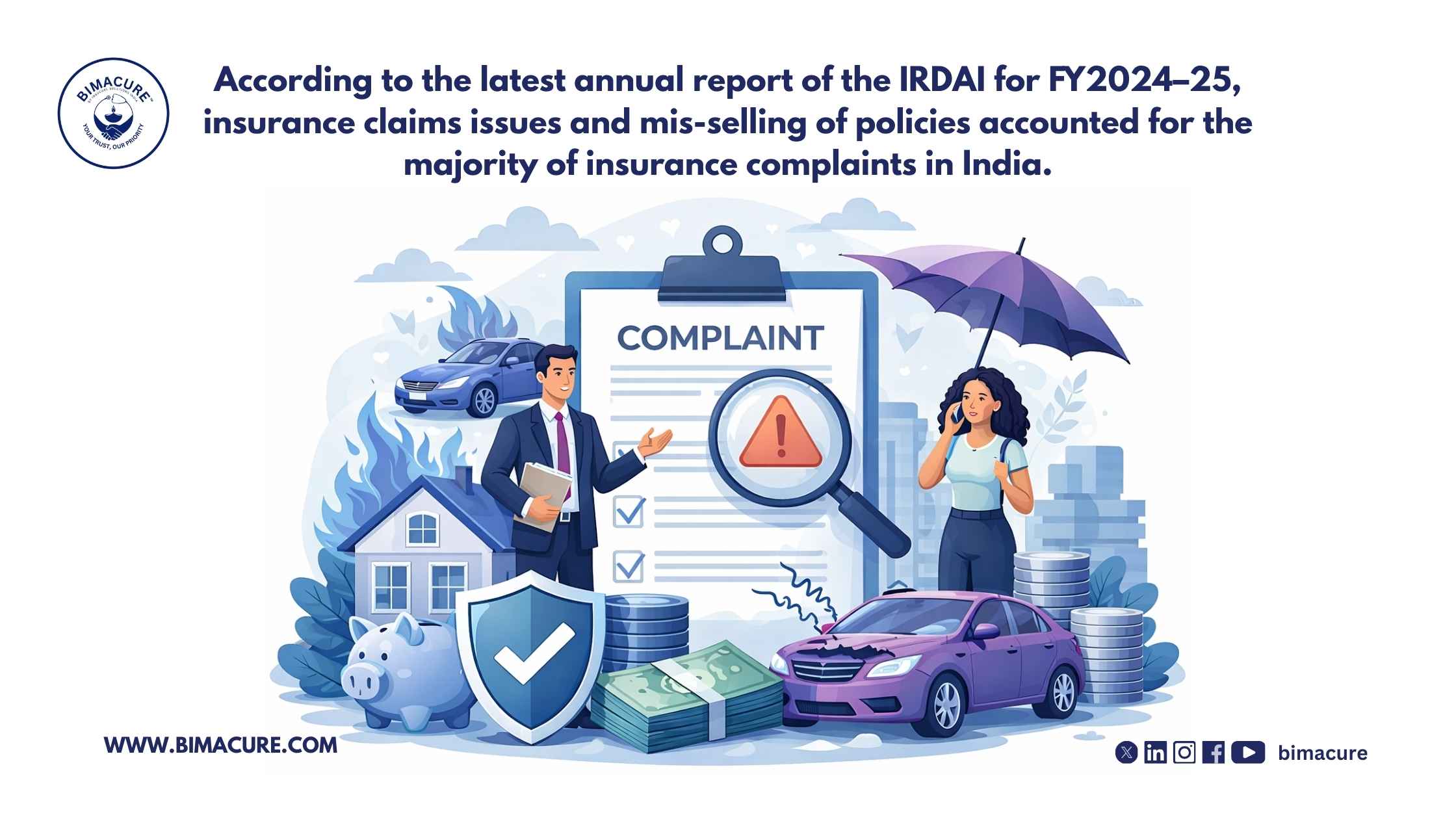
The Insurance Regulatory and Development Authority of India
(Irdai) recently released its comprehensive Annual Report for the financial
year 2024-25, shedding critical light on the state of the insurance landscape
in India. While the report highlights positive trends like continued market
growth and efforts towards greater digital integration, a significant and
concerning section details the nature of grievances faced by policyholders. The
findings are stark: challenges related to insurance claims and issues
surrounding insurance mis-selling remain the primary drivers of consumer
dissatisfaction in the country.
This revelation from the country's sole insurance regulator
underscores a deep-seated and persistent issue that continues to erode public
trust in one of the most vital financial security nets available. For years,
policyholders have navigated a complex and often intimidating ecosystem, with
many feeling that the promise of financial protection made during the sales
process is not fully realized when it's needed most.
Decoding the Complaint Landscape: Claims vs. Mis-selling
The Irdai Annual Report 2024-25 provides a granular
breakdown of grievances, clearly distinguishing between different types of
complaints across life, general, and health insurance sectors. However, two
broad categories stand head and shoulders above the rest:
1. The Persistent Challenge of Insurance Claims
A significant portion of complaints centers on the very core
of insurance: the claim settlement process. Policyholders frequently report:
This trend is particularly pronounced in health insurance,
where the urgency of a medical situation can make any delay or dispute
exceptionally traumatic.
2. The Growing Scourge of Insurance Mis-Selling
The report further emphasizes the rising prevalence of
complaints related to mis-selling. While insurance is intended for protection,
it is frequently marketed, often aggressively, as an investment product with
unrealistic promises. Common grievances in this category include:
The Irdai findings explicitly call out issues like the
mis-selling of traditional plans, particularly to vulnerable segments like the
elderly, and the prevalence of misleading return projections, especially on
Unit Linked Insurance Plans (ULIPs).
Restoring Trust: The Urgent Need for Reform and
Empowerment
The Irdai’s Annual Report serves as a crucial wake-up call
for the entire insurance ecosystem. The regulator itself is cognizant of these
issues and is actively working on several reforms, including strengthening the Bima Lokpal (Insurance
Ombudsman) for speedier grievance redressal, improving transparency in
policy documents, and imposing stricter penalties on insurers and agents found
guilty of unethical practices.
However, the report also places a vital responsibility on
the most important stakeholder: the consumer. For the insurance market to
function fairly and build lasting trust, policyholders need to move from being
passive receivers of information to proactive and empowered decision-makers.
The most potent tool in this transition is awareness.
Key Takeaways for Policyholders:
Bimacure: Your Professional Ally in Navigating Insurance
Disputes
This is where specialized services, and professional firms,
like Bimacure, play a
critical role. Understanding that an individual policyholder often lacks the
technical expertise and the negotiation leverage to challenge large insurance
companies, Bimacure positions itself as a professional partner committed to
resolving insurance grievances.
If you are a victim of insurance mis-selling or are facing
unjust issues with your insurance claim, Bimacure can provide essential
support:
The findings of the Irdai Annual Report 2024-25 provide
undeniable proof that the road to a customer-centric insurance industry is
still under construction. By remaining vigilant, informed, and seeking
professional assistance when necessary, policyholders can not only protect
their financial well-being but also play a critical role in demanding a more
transparent and accountable insurance market.
 BimaCureYour Trust Our Priority
We specialize in providing independent grievance redressal legal services. We are not an insurance company, broker, or intermediary registered with the IRDAI. We assist clients with insurance policy complaints by handling all documentation, communication, and legal support.
Corporate office : Merlin Infinite DN-51, Suit-603 Street No 11, DN Block, Sec V, Bidhannagar, Kolkata, WB 700091
Registered Office : 2A, Ganesh Chandra Avenue, Commerce House, 7th Floor, Room - 6A, Kolkata -70001
Bimacure.com is not related to IRDA/Ombudsman in any manner.© 2025 Copyrights by INSUCURE Solutions India (OPC) Pvt. Ltd. All Rights Reserved
ISO - 9001:2015 | ISO/IEC 27001:2022 | CIN - U70200WB2024OPC271472
Design & Develop by Webina Tech

