
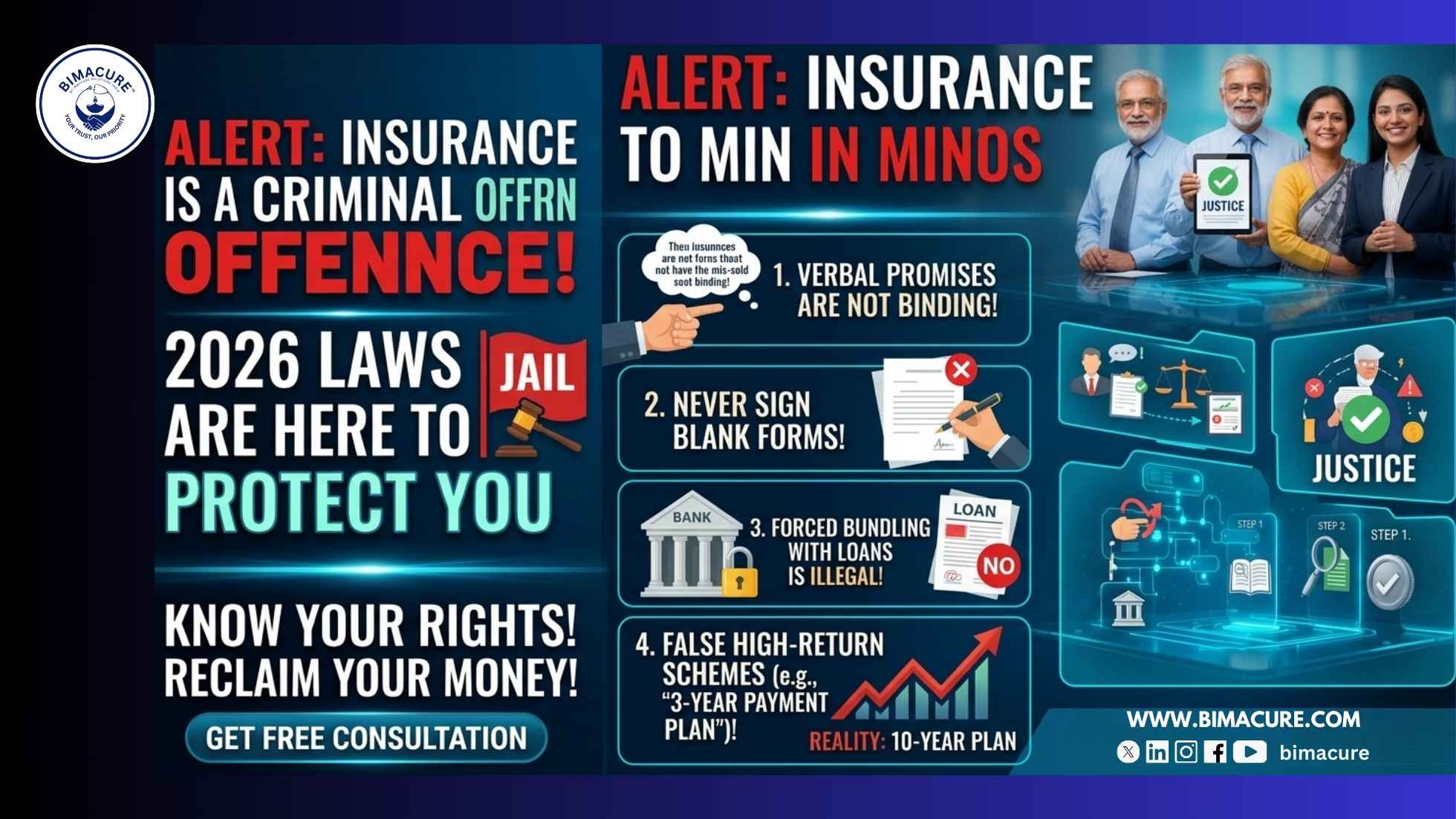
"Mis-selling is an Offence": New 2026 Laws Turn the Tide Against Insurance Fraud : The era of insurance agents and bank managers getting away with "verbal promises" is officially over. As of early 2026, a series of landmark regulatory shifts and strong statements from the Ministry of Finance have reclassified insurance mis-selling from a mere "business grievance" to a serious offence.
For years, victims were caught in a regulatory "grey
area" between the RBI and IRDAI. However, under the new legal framework,
the message is clear: Banks and insurers can no longer afford to mis-sell.
The 2026 Legal Landscape: Why It’s Now an
"Offence"
The most significant change comes from the integration of
consumer protection into the Bharatiya Nyaya Sanhita (BNS). During
high-level press conferences in February 2024 and 2026, the Finance Minister
explicitly stated that mis-selling—especially the forced bundling of insurance
with loans—is an offence.
What has changed for the consumer?
New Rights for Policyholders in 2026
If you are being pushed into a policy today, you have
specific protections that didn't exist a few years ago:
How Bimacure Helps You Navigate the New Laws
The laws have "teeth" now, but you still need the
right representation to make them work. At Bimacure, we leverage
these 2026 regulations to ensure you aren't just another statistic.
Take the First Step Toward Recovery
The government and regulators have finally acknowledged the
"human cost" of high commissions. If you have been a victim of
misleading sales tactics, you are no longer defenseless.
Stop being a victim of "Routine Business."
Visit www.bimacure.com
today to see how we can help you reclaim your money under the new 2026
insurance laws.
Nirmala Sitharaman warns banks on mis-selling - This video provides a direct record of the Finance Minister's stance on why mis-selling is now viewed as an offence, supporting the 2026 regulatory changes discussed.
 BimaCureYour Trust Our Priority
We specialize in providing independent grievance redressal legal services. We are not an insurance company, broker, or intermediary registered with the IRDAI. We assist clients with insurance policy complaints by handling all documentation, communication, and legal support.
Corporate office : Merlin Infinite DN-51, Suit-603 Street No 11, DN Block, Sec V, Bidhannagar, Kolkata, WB 700091
Registered Office : 2A, Ganesh Chandra Avenue, Commerce House, 7th Floor, Room - 6A, Kolkata -70001
Bimacure.com is not related to IRDA/Ombudsman in any manner.© 2025 Copyrights by INSUCURE Solutions India (OPC) Pvt. Ltd. All Rights Reserved
ISO - 9001:2015 | ISO/IEC 27001:2022 | CIN - U70200WB2024OPC271472
Design & Develop by Webina Tech

