
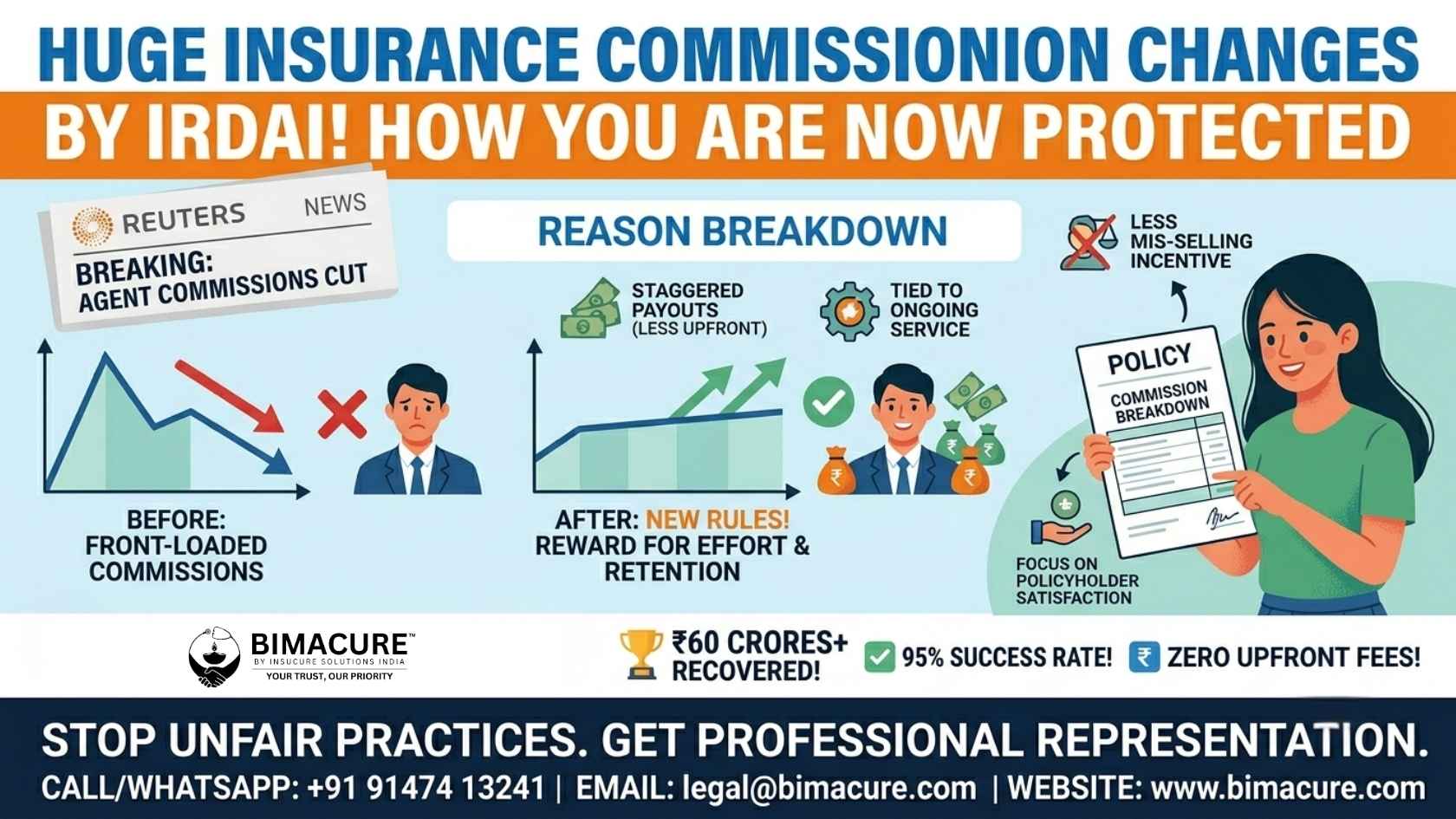
A massive shakeup is heading straight for India's ₹11.9
trillion insurance sector. Reports from Reuters reveal that the Insurance
Regulatory and Development Authority of India (IRDAI) is aggressively
drafting a comprehensive structural overhaul of insurance distribution
commissions to permanently eliminate rampant mis-selling.
For years, aggressive, upfront commission models have driven
agents and banks to prioritize sales volumes over actual customer suitability.
This imminent regulatory reset is about to put the power firmly back into the
hands of the policyholder.
Here is everything you need to know about the upcoming IRDAI
distribution reforms and how Bimacure can help you navigate this
changing landscape.
The Problem: Why Current Upfront Commission Rules Hurt
Consumers
Under the current framework, insurance agents, brokers, and bancassurance
(bank) partners can rake in massive commissions—up to 40% of the premium
on specific life and health insurance products. The catch? A massive chunk of
this money is paid right at the time of the sale (front-loaded).
This creates a dangerous incentive structure:
The New IRDAI Solution: 3 Pillars of the Regulatory
Reform
Following the enactment of the Sabka Bima Sabki Raksha
(SBSR) Act, the upcoming IRDAI framework seeks to dismantle this high-cost,
transaction-first distribution model through massive operational adjustments:
1. The End of Massive Upfront Payouts (Staggered
Commissions)
Instead of allowing distributors to walk away with huge
first-year cuts, the IRDAI is transitioning to a staggered commission model
spread across the entire lifecycle of the policy. If a bank or agent sells you
a misleading policy and you choose to let it lapse by year two or three, their
remaining commission stream will completely stop. This forces intermediaries to
focus entirely on customer retention and objective advising.
2. Transition to an Effort-Based Pricing Model
The regulator will explicitly tie commission caps to the
physical effort involved in customer care.
3. Radical Digital Traceability & Severe Fines
To put an end to anonymous mis-selling, every newly issued
insurance policy will be digitally tagged to the specific salesperson
responsible at the point of sale. If you register a mis-selling grievance years
later, regulators can trace the exact individual responsible. To back this up,
the maximum penalty for serious compliance violations has been hiked tenfold—from
₹1 crore to ₹10 crore.
Stuck with a Forced or Mis-Sold Policy? Bimacure Has Your
Back
While these new IRDAI commission rules aim to fix the future
of Indian insurance, millions of policyholders are currently struggling with
past instances of mis-selling or stuck claims.
If you were misled into an unsuitable plan by a bank or
agent, you do not have to fight the system alone. Bimacure operates as
your dedicated insurance legal consultant to help you recover your hard-earned
money.
The Final Verdict: Moving to a staggered payout model
aligns India directly with major global markets like the US and UK. Until these
rules become a full reality later this year, stay vigilant. If you suspect
you've been a victim of forced policy bundling or misrepresentation, act
immediately.
👉 Get a Free Consultation
with Bimacure Today:
 BimaCureYour Trust Our Priority
We specialize in providing independent grievance redressal legal services. We are not an insurance company, broker, or intermediary registered with the IRDAI. We assist clients with insurance policy complaints by handling all documentation, communication, and legal support.
Corporate office : Merlin Infinite DN-51, Suit-603 Street No 11, DN Block, Sec V, Bidhannagar, Kolkata, WB 700091
Registered Office : 2A, Ganesh Chandra Avenue, Commerce House, 7th Floor, Room - 6A, Kolkata -70001
Bimacure.com is not related to IRDA/Ombudsman in any manner.© 2025 Copyrights by INSUCURE Solutions India (OPC) Pvt. Ltd. All Rights Reserved
ISO - 9001:2015 | ISO/IEC 27001:2022 | CIN - U70200WB2024OPC271472
Design & Develop by Webina Tech

