
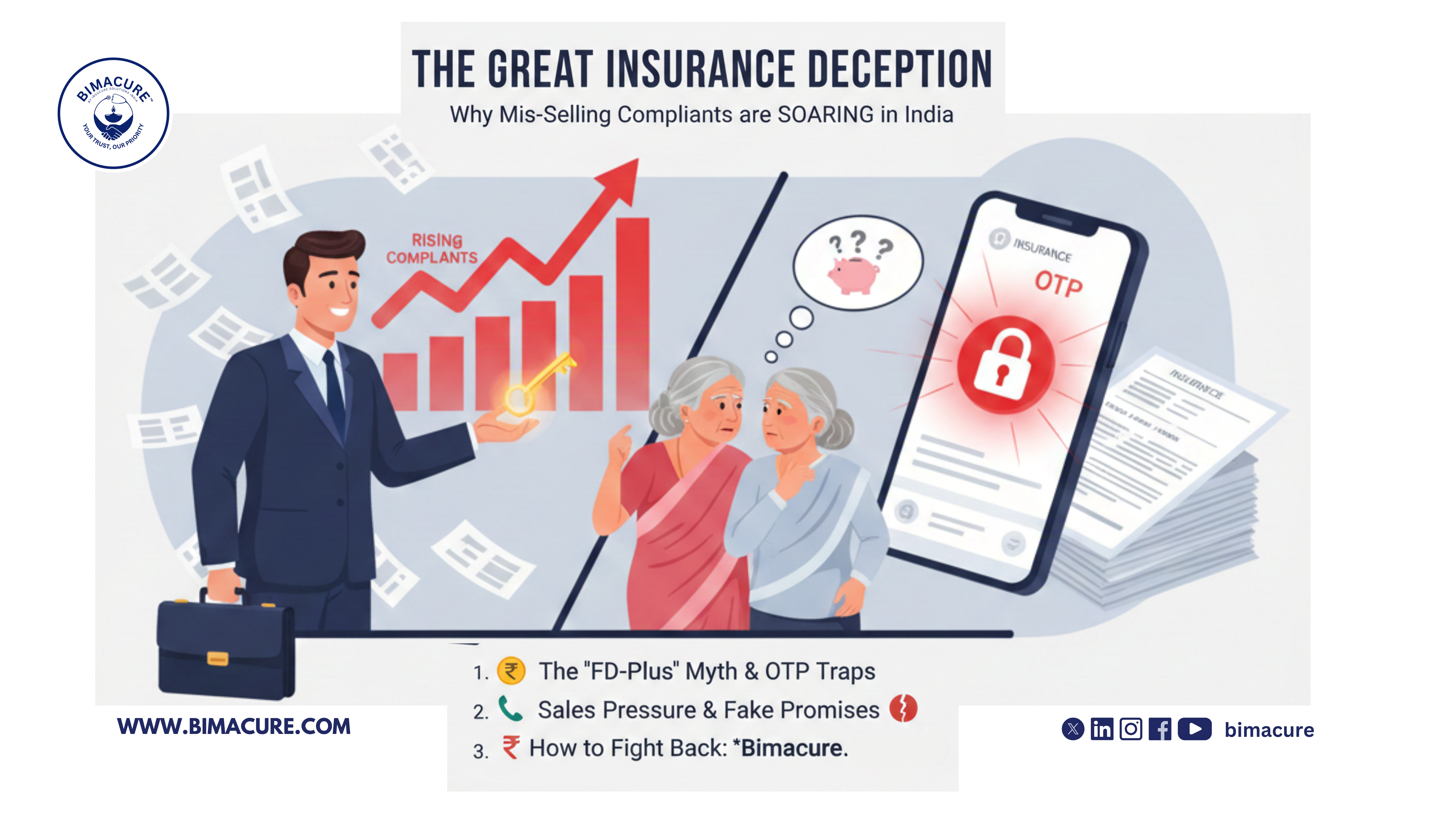
Why Mis-Selling Complaints Linked to Unfair Business
Practices Continue to Rise in India
In the ever-evolving landscape of Indian insurance, a
paradox is emerging. Despite stricter regulations and the 2024–2025 push for
transparency, mis-selling complaints are not just persisting—they are rising.
According to recent industry data, grievances under Unfair Business
Practices (UFBP) jumped by over 14% this year, now accounting for
nearly a quarter of all life insurance complaints.
Why is this happening? Let’s pull back the curtain on the
"Paper–Reality Gap" and explore the systemic drivers of this trend.
1. The Paper–Reality Gap in Insurance Selling
Regulators have introduced mandatory need analysis, benefit
illustrations, and recorded consent. However, on the ground, these safeguards
often turn into a "tick-box" exercise.
2. The 2024 Process Changes: Intent vs. Outcome
In 2024, IRDAI strengthened requirements for signed need
analysis and explicit risk confirmation. While the intent was to empower
the buyer, the outcome has been a more complex onboarding process that
agents often "shortcut" to save time or hide unfavorable terms. The
result is a system that is legally compliant on paper but ethically hollow in
practice.
3. The Real Driver: Sales Pressure and Incentives
At the heart of mis-selling lies a lopsided incentive
structure.
4. Low Awareness and Trust-Based Buying
India remains a "trust-based" market. Many
customers, particularly senior citizens, rely on the verbal word of
their bank manager.
5. Most Common Mis-Selling Patterns Seen on Ground
How Bimacure.com Can Help You Fight Back
If you find yourself stuck with a policy that was sold under
false pretences, you don't have to navigate the complex legal corridors alone. Bimacure.com specializes in
helping policyholders resolve grievances related to mis-selling and unfair
business practices.
Whether it is recovering your hard-earned money from a
mis-sold plan or dealing with a rejected claim, the experts at Bimacure.com
provide the technical and legal guidance needed to represent your case
effectively to insurers and the Insurance Ombudsman. They bridge the gap
between the victim and the resolution, ensuring that "Unfair Business
Practices" don't go unchallenged.
6. What Needs to Change to Reduce Mis-Selling?
To move beyond "paper compliance," the industry
needs a structural overhaul:
Frequently Asked Questions (Q&A)
Q: Why are mis-selling complaints increasing despite new
regulations? A: Most regulations focus on documentation
rather than incentives. As long as sales targets remain aggressive,
agents find ways to bypass procedural safeguards.
Q: How does OTP-based consent contribute to mis-selling?
A: It simplifies the process for the agent. Instead of explaining a
10-year lock-in, they may simply ask for an OTP to "activate the
account," which the customer provides without realizing they are signing a
contract.
Q: Can I get my money back if I was mis-sold a policy?
A: Yes, if you can prove unfair business practices, you can approach the
insurer’s grievance cell or the Ombudsman. Platforms like Bimacure.com
can assist you in building a strong case for a refund.
 BimaCureYour Trust Our Priority
We specialize in providing independent grievance redressal legal services. We are not an insurance company, broker, or intermediary registered with the IRDAI. We assist clients with insurance policy complaints by handling all documentation, communication, and legal support.
Corporate office : Merlin Infinite DN-51, Suit-603 Street No 11, DN Block, Sec V, Bidhannagar, Kolkata, WB 700091
Registered Office : 2A, Ganesh Chandra Avenue, Commerce House, 7th Floor, Room - 6A, Kolkata -70001
Bimacure.com is not related to IRDA/Ombudsman in any manner.© 2025 Copyrights by INSUCURE Solutions India (OPC) Pvt. Ltd. All Rights Reserved
ISO - 9001:2015 | ISO/IEC 27001:2022 | CIN - U70200WB2024OPC271472
Design & Develop by Webina Tech

